
How to Tell Your Spouse You Want a Divorce or Separation

Telling your spouse you want a divorce or separation is one of the most difficult conversations a person can have. It involves emotional preparation, careful timing, clear communication, and understanding the legal and practical consequences. A thoughtful approach can help reduce conflict, protect your emotional and financial well-being, and safeguard your children if you have any.
Sharing this news requires empathy, clarity, and planning. This guide walks you step by step through preparing for the conversation, handling reactions, protecting yourself legally, and maintaining emotional stability throughout the process.
Why Preparation Matters Before Telling Your Spouse
Before having this conversation, it’s normal to feel guilt, confusion, and self-doubt. You may worry about financial changes, co-parenting, or the emotional impact on your spouse. Many people also grieve the loss of the relationship itself, which can amplify feelings of anxiety or hesitation.
Working with a therapist can help clarify your goals and manage fear, guilt, and anxiety. Counseling offers a safe space to express and process emotions, and resources from the American Psychological Association or Mental Health America can guide on coping strategies.
Read: The 3 C’s of Divorce Explained: Communication, Cooperation, and Compromise
How to Prepare for the Conversation
Preparing to tell your spouse you want a divorce can feel overwhelming, but thoughtful planning can make an incredibly difficult moment more manageable. Taking time to consider when and where the discussion will happen, how you will communicate your feelings, and what support you may need beforehand can help the conversation unfold with greater clarity and less conflict.
1. Choose the Right Time and Place
Select a private, low-stress environment for the conversation. Avoid times of crisis, major holidays, or moments of high tension. If safety is a concern, consider a neutral public setting or having a trusted person nearby. For guidance in high-risk situations, the National Domestic Violence Hotline offers 24/7 support.
2. Plan What You’ll Say
Use “I” statements to express feelings without assigning blame. For example:
“I’ve been feeling unhappy in our marriage and need to make a change.”
This approach reduces defensiveness and keeps the discussion focused on your experiences.
3. Seek Support in Advance
- Therapist or counselor: Helps you confirm that divorce or separation is the right choice and equips you with coping strategies.
- Family law attorney: Provides guidance on your legal rights, financial matters, custody considerations, and the safest way to communicate about separation.
- Trusted friends or family: Emotional support is critical during and after the conversation
4. Gather Practical Information
Have important documents ready: financial records, property ownership details, and any information relevant to children or shared assets. Knowing your legal and financial position helps you communicate responsibly and reduces the risk of mistakes.

Step-by-Step Guide to Telling Your Spouse You Want a Divorce
- Start with honesty and calmness. Acknowledge the importance of the relationship while stating your decision clearly.
- Allow time for processing. Give your spouse space to absorb the news and express emotions.
- Move toward next steps. Discuss temporary living arrangements, boundaries, or parenting logistics.
- Emphasize respect. Focus on fairness, empathy, and maintaining dignity for both parties
How to Handle Different Reactions from Your Spouse
Reactions vary, and preparing for them can reduce conflict.
- If your spouse cries: Offer empathy without feeling responsible for “fixing” their emotions. Be patient and listen.
- If your spouse gets angry: Remain calm and avoid arguing. Set boundaries and, if needed, step away until emotions settle.
- If your spouse refuses to accept divorce: Reiterate your decision firmly and calmly. Encourage professional mediation if necessary.
- If your spouse threatens retaliation: Prioritize safety. Contact your attorney or local authorities if there is risk of harm.
- If your spouse begs you to stay: Acknowledge their feelings, but stay clear about your decision. Emotional empathy is different from agreement.
Should You Tell Your Spouse in Person?
While in-person conversations are generally recommended, certain situations may require alternative methods:
- Phone or video call: Only if meeting in person is unsafe.
- Letter or email: Useful for high-conflict or abusive relationships.
- Therapist-mediated conversation: Provides structure and support for both parties.
How to Tell Your Spouse You Want a Divorce When You Have Children
- Present a united front when possible.
- Time conversations around school schedules and routines.
- Avoid blaming each other in front of children.
- Use age-appropriate language and reassure stability.
- Discuss co-parenting and logistics calmly after the initial conversation.
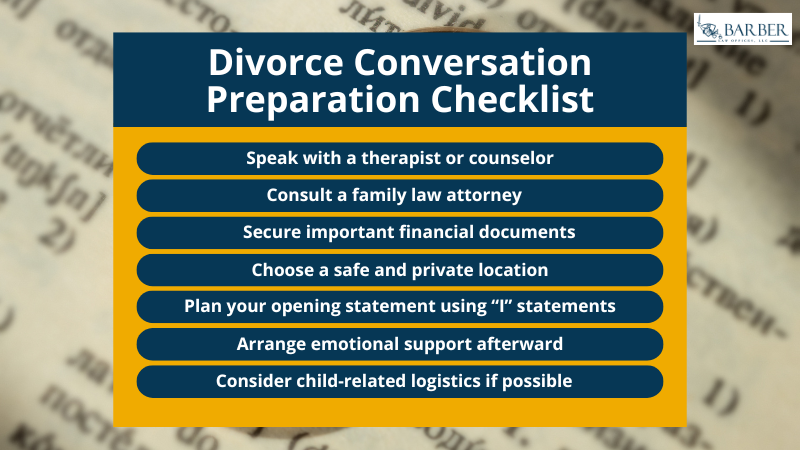
Divorce Conversation Preparation Checklist
Legal and Practical Considerations Before and After the Conversation
Consulting a family law attorney is essential to protect finances, assets, and custody arrangements. You can also review state-specific guidance through Illinois Legal Aid Online or Illinois Courts, and the American Bar Association provides general resources on divorce law. Attorneys provide guidance on:
- Document collection and property division
- Spousal support or alimony
- Child custody and co-parenting strategies
- Safe communication and social media precautions
Even seemingly small actions, like texts or emails, can impact the legal process. Your attorney can advise on what to document and how to communicate responsibly.
Maintaining Your Emotional Well-Being During Divorce
- Lean on your support network of friends, family, or a counselor.
- Prioritize self-care: sleep, exercise, nutrition.
- Implement a 24-hour rule before responding to triggering messages.
- Avoid impulsive decisions or signing legal documents without counsel.
According to the American Psychological Association, structured emotional support significantly improves outcomes during divorce, reducing anxiety, depression, and relational conflict.
Key Takeaways and Next Steps
- Approach the conversation with empathy and clarity, focusing on your feelings rather than assigning blame.
- Prioritize safety, particularly if there is a history of domestic abuse or high conflict.
- Legal support is essential, especially if there is a risk that your spouse may hide assets or challenge custody arrangements.
- Emotional support, through therapy or trusted friends and family, is equally important during this transition.
- Consider preparing practical steps in advance, including financial documents, living arrangements, and co-parenting plans.
- Consulting a family law attorney early can help prevent costly mistakes, clarify issues like property division and child custody, and make the process more manageable.
Take Action: Consult Experienced Divorce Attorneys
 When you are ready to tell your spouse you want a divorce or separation, the family law attorneys at Barber Law Offices, LLC can guide you through every step. We handle all types of divorces, from uncontested to high-conflict and high-asset cases, providing personalized strategies tailored to your unique circumstances.
Our attorneys help navigate shared parenting logistics, financial planning, and asset protection while maintaining clear communication and expert guidance throughout the process.
With decades of experience serving individuals and families in Schaumburg, Illinois, and the surrounding communities, we ensure your divorce proceeds as smoothly and fairly as possible. Schedule a free consultation today to protect your interests and move forward with confidence.
Frequently Asked Questions (FAQs)
How do I tell my spouse I want a separation without hurting them?
Focus on your feelings using “I” statements, remain calm, and avoid blaming language. Emphasize respect and empathy while being clear about your decision.
Is it better to ask for a separation before filing for divorce?
A separation can provide emotional clarity and help you plan logistics, finances, and parenting arrangements before officially filing for divorce.
Should I consult a lawyer before telling my spouse I want a divorce?
Yes. A family law attorney can explain your rights, help prepare documentation, and guide you on communication strategies to protect your legal interests.
How can I prepare for my spouse’s reaction to divorce news?
Expect a range of emotions, including shock, anger, sadness, or denial. Plan your response calmly, maintain boundaries, and consider professional mediation if needed.
How should I handle the conversation if we have children?
Avoid blaming language in front of children, present a united front if possible, and reassure them of stability. Use age-appropriate explanations and plan co-parenting logistics.

Allen Gabe is an experienced Illinois attorney specializing in family law, bankruptcy, and real estate matters. With over 50 years of experience, he has helped countless clients navigate divorce, child custody, debt relief, and complex legal challenges with compassion and expertise. Recognized for his dedication, Allen has received multiple awards for client satisfaction and is an active member of professional and community organizations in the Chicago suburbs.

