
The 3 C’s of Divorce Explained: Reduce Legal Costs & Stress in Divorce
Divorce is one of life’s most difficult transitions. It brings emotional stress, financial uncertainty, and complicated legal decisions. In fact, more than 20% of first marriages end in divorce within five years, and 48 percent of marriages dissolve by the 20-year mark, highlighting how common these situations are. While every divorce is different, some patterns consistently lead to smoother outcomes.
After decades of handling divorce cases in Schaumburg and throughout Cook County, one truth stands out: divorces become more manageable when spouses follow three core principles. These are often called the three C’s of divorce: communication, cooperation, and compromise.
These principles are not just relationship advice. Whether you are navigating the Domestic Relations Division in Cook County or attending a case management conference in the 18th Judicial Circuit of DuPage County, local judges look for these behaviors when determining if a couple is acting in the best interests of the child. When handled strategically, the 3 C’s can reduce conflict, shorten timelines, and protect long-term stability.
What Are the 3 C’s of Divorce?
Couples heading toward divorce often struggle with communication, cooperation, and compromise. Interestingly, the same principles that sustain a marriage can help guide divorce proceedings toward amicable outcomes.
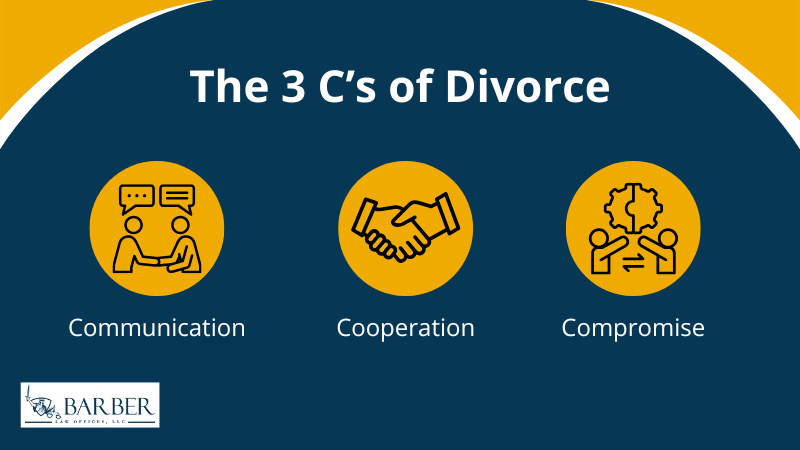
The three C’s of divorce are:
- Communication: Keeping conversations clear, transparent, and empathetic.
- Cooperation: Working together respectfully, even in conflict.
- Compromise: Finding solutions that are fair and realistic for both parties.
Illinois courts tend to favor parties who act reasonably, especially when children are involved. Judges look for evidence that each parent can communicate and cooperate in the child’s best interests. These behaviors often carry more weight than many people realize.
Read More: The Divorce Process in Schaumburg, IL
1. Communication – The Legal Importance of Clear Dialogue
Why Communication Matters in Court
Communication during divorce is not just emotional. It becomes part of the legal record. Emails, texts, parenting app messages, and financial disclosures can all appear in court. Judges may review communication history when evaluating parenting ability, honesty in financial matters, and willingness to resolve disputes. Poor communication can escalate a case. Calm, organized communication builds credibility.
Practical Tips for Effective Communication
To maintain clear and productive communication during divorce, consider the following strategies:
- Keep detailed records of emails, texts, and agreements to prevent misunderstandings or disputes.
- Schedule structured discussions with a divorce mediator or attorney to ensure productive dialogue.
- Approach conversations with empathy, focusing on solutions rather than blame.
- Use neutral, calm language to avoid escalating conflicts.
Mistakes That Create Legal Risk
- Hiding assets, debts, or important information from your spouse.
- Using accusatory or confrontational language during discussions.
- Avoiding essential conversations about co-parenting or financial arrangements.
Illinois courts take financial transparency seriously. Withholding information can result in penalties or unfavorable rulings.
2. Cooperation – Why Courts Pay Attention
Cooperation and Custody Decisions
Even when spouses disagree, courts expect a basic level of cooperation. In custody matters, judges consider whether parents can work together to support their children. A parent who consistently refuses to cooperate may appear unwilling to prioritize the child’s stability.
Ways to Demonstrate Cooperation
Cooperation does not mean giving up your rights. It means acting reasonably and strategically:
- Using “I” statements to express feelings without blaming your spouse.
- Practicing active listening to truly understand the other party’s perspective.
- Focusing on shared goals, such as co-parenting schedules, financial stability, and minimizing stress.
- Engaging professional support, like mediators or attorneys, to facilitate cooperation when tensions run high.
When one spouse acts cooperatively, and the other does not, the contrast becomes clear in court.
3. Compromise – The Reality of Divorce Settlements
Why Compromise is Necessary
Very few divorces end with total victory for one side. Trials are expensive, unpredictable, and emotionally draining. Most successful cases resolve through negotiation. Compromise allows both parties to move forward instead of remaining trapped in litigation.
How to Compromise Effectively
- Consult with your attorney before negotiating to understand what you can and cannot compromise.
- Prioritize high-value items, such as child custody, major assets, or significant debts.
- Be willing to make concessions on lower-priority items to secure more important goals.
- Understand the financial and tax implications of each compromise to avoid unexpected consequences.
Real-Life Examples of Compromise in Divorce
- Accepting a custody schedule that differs from your initial expectations.
- Agreeing to a smaller share of a bank account in exchange for another asset.
- Taking on additional debt to avoid disputes over higher-value property.

Implementing the 3 C’s in Your Divorce
Applying communication, cooperation, and compromise does not mean being passive. It means protecting your position while reducing unnecessary damage.
- Document everything: Maintain clear records of all financial, parenting, and legal matters.
- Seek professional guidance: Mediators, financial advisors, and divorce attorneys can help maintain fairness.
- Focus on shared goals: Prioritize children’s well-being, equitable asset division, and emotional health.
- Be flexible: Remain open to new information and negotiation strategies.
Following these steps can reduce conflict, lead to smoother co-parenting, faster settlements, and a more positive post-divorce life.
What Are the 3 C’s of Marriage?
The three C’s of a healthy marriage—communication, commitment, and compromise—form the foundation of a strong relationship. These values foster cooperation and help couples discover common ground, which is essential for supporting each other’s well-being.
- Communication that is candid and open allows married couples to feel heard and understood. It strengthens the bond as both partners feel free to express their needs and perspectives. Voicing concerns openly helps them avoid or manage conflicts wisely.
- Commitment to each other keeps the marriage steady. It’s a promise to look after one another’s well-being, which helps partners maintain trust and security.
- Compromise enables couples to find a middle ground, even when their opinions differ. It’s an equal give-and-take, where neither partner dominates the relationship, creating a balanced and supportive environment.
Divorce Attorneys Serving Cook County
Divorce is a complex process. Emotional tension, overwhelming feelings, and a contentious partner can make divorce overwhelming without professional guidance.
At Barber Law Offices, LLC, our divorce attorneys provide expert guidance on child custody, property division, spousal support, and post- or pre-nuptial agreements in Schaumburg, IL, and the nearby areas of Lake County, Cook County, McHenry County, and DuPage County. We represent clients in both uncontested and contested divorces, helping them navigate Illinois family law while applying principles like communication, cooperation, and compromise to achieve better outcomes.
Call our Schaumburg office today to schedule a free consultation and learn how our experienced divorce attorneys can support you every step of the way.
Frequently Asked Questions (FAQs) About Divorce
What are the 4 A’s of divorce?
The 4 A’s of divorce are Adultery, Addiction, Abuse, and Abandonment. Adultery breaks trust through extramarital relationships, addiction creates stress and neglect, abuse includes emotional or physical harm, and abandonment happens when a spouse leaves without returning. Understanding these helps couples and attorneys address serious issues and plan a safer, fair divorce.
What is the number 1 indicator of divorce?
The biggest warning sign is persistent communication problems. Couples who avoid talking, argue constantly, or struggle to understand each other are much more likely to separate. Addressing communication early—through counseling or mediation—can prevent conflict from escalating.
Can the 3 C’s help in contested divorces?
Yes. Communication, Cooperation, and Compromise help even in contested cases. Clear conversations, respectful cooperation, and a willingness to give a little make negotiations smoother, reduce stress, and can even influence court decisions in your favor.
What happens if one spouse refuses to cooperate?
If a spouse won’t cooperate, divorce can take longer, cost more, and complicate custody or financial settlements. Courts in Illinois may factor in non-cooperation, so having a knowledgeable attorney is key to protecting your rights and keeping the process moving.
How do the 3 C’s affect divorce outcomes?
The 3 C’s improve outcomes by reducing conflict and creating fair agreements. Couples who communicate openly, cooperate, and compromise are more likely to reach balanced settlements, maintain healthy co-parenting, and move forward without extra stress.
Additional Helpful Resources
The Illinois Divorce Process
Learn step-by-step what to expect during a divorce in Illinois, from filing petitions to finalizing settlements. This guide covers timelines, legal requirements, and tips for navigating custody, property division, and spousal support smoothly.
9 Signs Your Partner Wants a Divorce
Wondering if your spouse is considering ending the marriage? This blog outlines nine common behavioral and emotional signs, helping you recognize potential issues early and make informed decisions about your next steps.
Using Witnesses in a Divorce Trial
Witnesses can play a critical role in divorce proceedings. Explore when and how to use them effectively, including what testimony is admissible, how to prepare witnesses, and strategies for strengthening your case in court.

Allen Gabe is an experienced Illinois attorney specializing in family law, bankruptcy, and real estate matters. With over 50 years of experience, he has helped countless clients navigate divorce, child custody, debt relief, and complex legal challenges with compassion and expertise. Recognized for his dedication, Allen has received multiple awards for client satisfaction and is an active member of professional and community organizations in the Chicago suburbs.

