
What to Expect at Your First Cook County Divorce Court Appearance

Navigating your first divorce court appearance in Cook County can feel overwhelming, especially if you’re unsure what to expect at the Cook County Circuit Court. Whether your case is contested or largely agreed upon, this initial hearing is not where your marriage will officially end, but it is a critical step in the process.
During this early stage, judges and parties focus on procedural matters: confirming all necessary paperwork has been filed, establishing timelines for disclosures and future hearings, and addressing urgent temporary issues like child support or custody arrangements.
Knowing how the Cook County Domestic Relations Division operates, from check-in procedures to the types of questions a judge may ask, can help reduce anxiety, keep you organized, and ensure your first court day goes smoothly.
Why the First Divorce Court Date in Cook County Matters
Your first divorce court appearance in Cook County may seem routine, but it sets the tone for the rest of your case. Even though no final decisions are made at this stage, this hearing officially launches your divorce process and can have a lasting impact on temporary arrangements.
During this hearing, the court may:
- Confirm all necessary documents have been filed correctly
- Discuss temporary child custody, parenting time, or support arrangements
- Schedule deadlines for financial disclosures, mediation, or future hearings
Showing up prepared and informed demonstrates to the court that you are taking the process seriously, which can prevent unnecessary delays or complications.
Steps Before Your First Cook County Court Appearance
Before you step into the courtroom for your first appearance in a divorce case, several key steps take place. Understanding this process can help reduce stress and ensure you’re prepared.
1. Filing the Petition for Dissolution
The divorce process begins when the petitioner files a Petition for Dissolution of Marriage with the Cook County Circuit Court. This document outlines the reason for the divorce and requests regarding property division, custody, support, and other relevant matters.
2. Serving Your Spouse
Once the petition is filed, your spouse (the respondent) must be formally notified. This “service of process” can be completed through a sheriff, a professional process server, or certified mail. Proper service ensures your spouse can respond and participate.
3. Receiving Your Court Date
After your spouse is served, the court schedules your first hearing. You will receive a notice with the date, time, and location, which may be at the Richard J. Daley Center in downtown Chicago, the Rolling Meadows Courthouse, or another Cook County location. This hearing covers preliminary matters like temporary custody, support, or restraining orders.
Where Cook County Divorce Cases Are Heard
Divorce cases in Cook County are handled by the Domestic Relations Division of the Circuit Court. The courthouse you will attend depends on your residential address.
Below is a guide to the main courthouses serving Chicago and the surrounding suburbs:
| Courthouse | Address | Areas Served |
|---|---|---|
| Richard J. Daley Center | 50 W. Washington St., Chicago, IL 60602 | Downtown Chicago |
| Skokie Courthouse | 5600 Old Orchard Rd., Skokie, IL 60077 | Skokie, Evanston, Glenview, Niles, Lincolnwood |
| Rolling Meadows Courthouse | 2121 Euclid Ave., Rolling Meadows, IL 60008 | Schaumburg, Palatine, Arlington Heights, Hoffman Estates |
| Maywood Courthouse | 1500 Maybrook Ave., Maywood, IL 60153 | Oak Park, Maywood, Melrose Park |
| Markham Courthouse | 16501 S. Kedzie Pkwy., Markham, IL 60428 | South suburbs (Dolton, Harvey, Chicago Heights) |
| Bridgeview Courthouse | 10220 S. 76th Ave., Bridgeview, IL 60455 | Southwest suburbs (Oak Lawn, Palos Hills) |
Knowing which courthouse your first hearing will be at helps you plan for parking, security screening, and arrival times. Whether your case is in downtown Chicago or the northwest suburbs, being prepared can reduce stress and ensure you’re ready to address temporary orders, custody, or support issues.
Step-by-Step: What Happens at the First Divorce Court Date
Arriving at the Courthouse
- Plan to arrive early. Cook County courthouses can be busy, with parking and security lines.
- Dress professionally and bring all required documents in a notebook or folder.
- Punctuality shows the court that you take the process seriously.
Checking In with the Clerk
- The clerk will verify your appearance, review paperwork, and direct you to the correct courtroom.
- Keep track of your case number and any instructions; they save time and prevent confusion.
When Your Case Is Called
- Cases are called in order by the court. Approach the bench calmly, speaking clearly and respectfully.
- If you have an attorney, they will usually handle the initial discussion with the judge.
What the Judge Reviews
The first hearing is procedural. Judges often focus on:
- Confirming all necessary documents have been filed
- Discussing temporary child custody, visitation, or support
- Establishing deadlines for financial disclosures, mediation, or subsequent hearings
- Asking brief questions to ensure parties understand the process and responsibilities
Possible Outcomes of the First Hearing
While a final divorce decree is not issued at this stage, temporary orders may be granted:
- Temporary child support or spousal maintenance
- Temporary custody or parenting time arrangements
- Orders for financial documentation or other required filings
What Illinois Judges Look for at the First Hearing
At your first divorce court appearance in Cook County, the judge isn’t deciding the outcome of your case, but they are paying close attention to how both parties present themselves and handle the process. This early impression can influence how smoothly your case moves forward.
- Preparation and Organization: All required paperwork should be filed and ready. Missing forms can cause delays.
- Willingness to Follow Court Procedures: Cooperation with timelines, deadlines, and court rules is expected.
- Focus on the Best Interests of Children: Judges prioritize stability, parenting plans, and child well-being.
- Honesty and Transparency: Full disclosure of income, assets, and expenses builds credibility.
- Ability to Communicate and Cooperate: A cooperative attitude can make proceedings more efficient and reduce unnecessary conflicts.
- Respect for the Court: Arriving on time, dressing appropriately, and speaking respectfully leave a positive impression.
How to Prepare for Your First Cook County Divorce Court Date
Walking into your first divorce hearing with a clear plan can make a big difference in how smoothly the day goes. Preparation not only helps reduce stress but also ensures you’re ready to address any issues the court may raise.
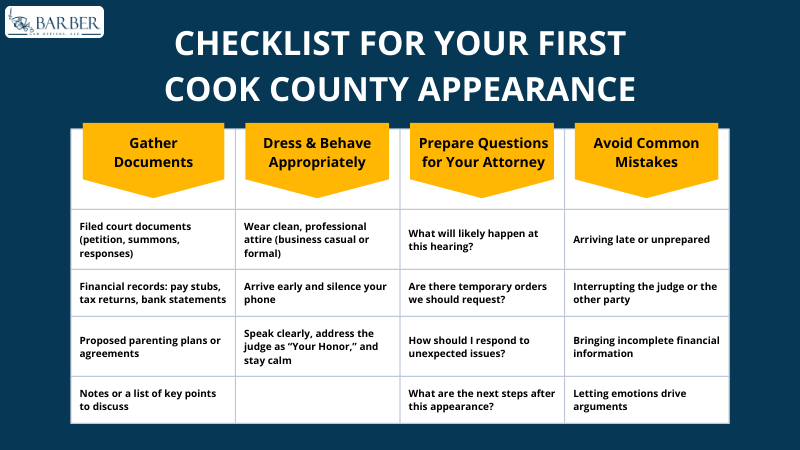
Documents to Bring
- Filed court documents (petition, summons, responses)
- Financial records: pay stubs, tax returns, bank statements
- Proposed parenting plans or agreements
- Notes or a list of key points to discuss
How to Dress and Behave
- Clean, professional attire (business casual or formal)
- Arrive early and silence your phone
- Speak clearly, address the judge as “Your Honor,” and stay calm
Questions to Ask Your Attorney
- What will likely happen at this hearing?
- Are there temporary orders we should request?
- How should I respond to unexpected issues?
- What are the next steps after this appearance?
Mistakes to Avoid
- Arriving late or unprepared
- Interrupting the judge or the other party
- Bringing incomplete financial information
- Letting emotions drive arguments
- Ignoring court instructions or deadlines
Temporary Orders That May Be Addressed in Cook County
Temporary orders are common at the first hearing and can significantly impact your day-to-day life until your divorce is resolved.
Parenting Time and Custody
If children are involved, one of the court’s top priorities is establishing a temporary parenting arrangement. This may include a schedule for parenting time (visitation) and determining how major decisions about the child will be made. Judges focus on stability and the child’s best interests, often aiming to create a fair and workable routine for both parents.
Child Support
The court may also set a temporary child support amount based on Illinois guidelines. This ensures that the child’s financial needs are met while the divorce is pending. The judge typically considers each parent’s income, parenting time, and other relevant expenses when determining the amount.
Spousal Maintenance
In some cases, one spouse may request temporary spousal maintenance (also known as alimony). This is intended to provide financial support to a lower-earning spouse during the divorce process. The court evaluates factors such as income differences, financial needs, and the standard of living established during the marriage.
Exclusive Possession of the Home
If tensions are high or living together is no longer practical, the court may grant one spouse temporary exclusive possession of the marital home. This means one party can remain in the home while the other must find alternative housing. These decisions are often based on factors like safety, children’s living arrangements, and each party’s housing options.
Temporary orders help create structure and reduce conflict while your case moves forward. Because these decisions can affect your finances, living situation, and time with your children, it’s important to be prepared to address these issues at your first court appearance.
Speak With an Illinois Divorce Attorney Before Your Court Date
Your first divorce court appearance is an important step and having the right legal guidance can make a significant difference in how confidently and effectively you navigate it. While it’s possible to represent yourself, working with an experienced Illinois divorce attorney ensures you understand your rights, meet all court requirements, and are fully prepared for what lies ahead.
Our experienced attorneys can help you:
- Prepare and review all necessary documents before your hearing
- Advocate for fair temporary orders involving custody, support, and property
- Anticipate potential challenges and develop a strategy
- Ensure you meet deadlines and comply with court procedures
Even a single consultation before your first court date can provide clarity, reduce stress, and help you avoid costly mistakes. If you’re preparing for a divorce in Illinois, the experienced attorneys at Barber Law Offices, LLC are here to help. Our divorce attorneys understand the complexities of Cook County divorce proceedings and can guide you through each step with personalized legal support.
Don’t walk into court unprepared. Contact Barber Law Offices, LLC today to schedule a consultation and get the guidance you need to move forward with confidence.
Frequently Asked Questions (FAQs)
What happens at my first divorce court appearance in Cook County?
The first hearing is mostly procedural. The judge confirms paperwork is filed, may issue temporary orders for child support, custody, or spousal maintenance, and sets deadlines for future steps like mediation or financial disclosures.
How should I prepare for a Cook County divorce court hearing?
Arrive early, dress professionally, bring all required documents (petition, summons, financial records), and have a list of key points or questions for the judge or your attorney. Preparation reduces stress and ensures the process goes smoothly.
Can I represent myself in a Cook County divorce case?
Yes, you can, but having an experienced Cook County divorce attorney can help you understand court procedures, request temporary orders, and avoid costly mistakes during your first appearance.
What temporary orders might the judge issue at the first hearing?
Common temporary orders include child support, parenting time schedules, spousal maintenance, and exclusive possession of the marital home. These remain in effect until the divorce is finalized.

Allen Gabe is an experienced Illinois attorney specializing in family law, bankruptcy, and real estate matters. With over 50 years of experience, he has helped countless clients navigate divorce, child custody, debt relief, and complex legal challenges with compassion and expertise. Recognized for his dedication, Allen has received multiple awards for client satisfaction and is an active member of professional and community organizations in the Chicago suburbs.

