
Divorce vs. Legal Separation in Illinois: What Is the Difference?
When a marriage becomes difficult or unfulfilling, many couples begin exploring whether divorce or legal separation is the better option. While both allow spouses to live separately and establish legal arrangements regarding finances, property, and children, they are not the same.
The biggest difference between divorce and legal separation is that divorce permanently ends the marriage, while legal separation allows spouses to live apart without legally dissolving the marriage. In Illinois, both options can address child custody, support, and property division, but only divorce allows remarriage and permanently terminates marital rights.
Choosing between legal separation and divorce can have long-term financial, emotional, and legal consequences. Understanding how each process works under Illinois law can help you make a more informed decision about your future.
Quick Takeaways: Divorce vs. Legal Separation
- Legal separation allows spouses to live apart while remaining legally married, while divorce permanently ends the marriage. In Illinois, both options can address child custody, child support, spousal support, and property division, but only divorce allows remarriage and completely dissolves marital rights.
- Legal separation may help preserve certain benefits, including health insurance coverage and possible tax advantages. Many couples choose separation when they are uncertain about divorce, want time for reconciliation, or need to maintain financial stability.
- Divorce provides a final legal resolution and complete financial separation between spouses. Once finalized, both individuals regain single status and can move forward independently without ongoing marital obligations.
- The right choice depends on your financial circumstances, family dynamics, personal values, and long-term goals. Speaking with an experienced Illinois family law attorney can help you understand which option best protects your future.
What Is Legal Separation?
A legal separation is a formal legal arrangement that allows married couples to live separately without ending the marriage. In Illinois, legal separation can provide structure and legal protections while spouses determine whether reconciliation or divorce is the best path forward. For many couples, legal separation serves as a middle ground between remaining together and permanently ending the marriage.
How Legal Separation Works in Illinois
Legal separation is established through a court-approved agreement or court order. The spouses may negotiate terms independently or work with attorneys to resolve important issues involving finances, parenting responsibilities, and living arrangements.
Once approved by the court, the agreement outlines each spouse’s rights and responsibilities while living separately. This may include:
- Who remains in the marital home
- Division of household expenses
- Debt responsibilities
- Parenting schedules
- Financial support obligations
In some situations, spouses may continue living under the same roof while functioning as separate households.
Key Legal Outcomes of Legal Separation
Although the marriage remains legally intact, legal separation addresses many of the same issues involved in divorce.
Illinois courts may establish:
- Child custody and parenting plans
- Child support obligations
- Spousal maintenance
- Division of financial responsibilities
- Temporary property arrangements
These agreements become legally enforceable, helping provide stability and clarity while spouses live apart.
Advantages of Legal Separation
Legal separation can offer several benefits for couples who are not ready or willing to end their marriage completely. It allows spouses to live independently while still maintaining certain legal ties, which can provide a sense of stability during a difficult transition.
For some, legal separation offers time and space to reassess the relationship without making a permanent decision. It can also preserve access to certain benefits, such as health insurance or tax advantages, depending on individual circumstances. Additionally, it provides court-ordered agreements for important issues like custody, support, and financial responsibilities, helping reduce uncertainty and conflict during the separation period.
Disadvantages of Legal Separation
Despite its benefits, legal separation also has drawbacks. Because the marriage is not legally dissolved, both spouses remain tied to one another in certain legal and financial ways. This can create complications if either party wishes to fully move on or establish complete independence.
Legal separation may also become more complex over time, especially if circumstances change and a divorce is later pursued. In those cases, some issues may need to be revisited or renegotiated. Additionally, remaining legally married can limit future relationship decisions, including the ability to remarry.
What Is Divorce?
A divorce is the formal legal termination of a marriage. Once finalized, both individuals are legally single and free to remarry. In Illinois, divorce is governed by the Illinois Marriage and Dissolution of Marriage Act, which outlines the legal process for dissolving a marriage and resolving related issues involving children, finances, and property.
How Divorce Works in Illinois
The divorce process typically begins when one spouse files a petition for dissolution of marriage with the court. From there, the spouses must address issues such as:
- Property division
- Child custody
- Parenting time
- Child support
- Spousal maintenance
- Allocation of debts
Some divorces are resolved amicably through settlement negotiations or mediation, while contested divorces may require litigation and court hearings before a judge. The Illinois Courts website also provides official family law forms and resources related to divorce, legal separation, parenting responsibilities, and court procedures.
Key Legal Outcomes of Divorce
Divorce permanently ends the legal relationship between spouses. The court will issue a final divorce judgment that establishes:
- Permanent division of marital assets and debts
- Custody and parenting arrangements
- Child support obligations
- Spousal support orders
- Legal rights moving forward
Unlike legal separation, divorce creates a complete legal and financial separation between spouses.
Advantages of Divorce
Divorce provides a clear and permanent end to a marriage, allowing both individuals to fully move forward with their lives. Once finalized, each spouse has complete legal independence, including the freedom to remarry and make financial and personal decisions without ongoing legal ties to the other party.
It also creates finality in key areas such as property division, custody arrangements, and financial responsibilities. This can reduce ongoing uncertainty and eliminate the need for continued court involvement in the marital relationship. For many, this sense of closure is an important step in rebuilding stability and planning for the future.
Disadvantages of Divorce
Despite its clarity, divorce can be emotionally and financially challenging. The process may involve disputes over assets, custody, and support, which can be stressful and time-consuming. Legal fees and court costs can also add up, especially in contested cases.
Divorce permanently ends the marriage, which may be difficult for individuals who are uncertain or who hope for reconciliation in the future. It can also impact shared benefits such as health insurance, taxes, and retirement planning, requiring both parties to adjust to new financial realities.
Divorce vs. Separation: Key Differences Explained
Marital Status
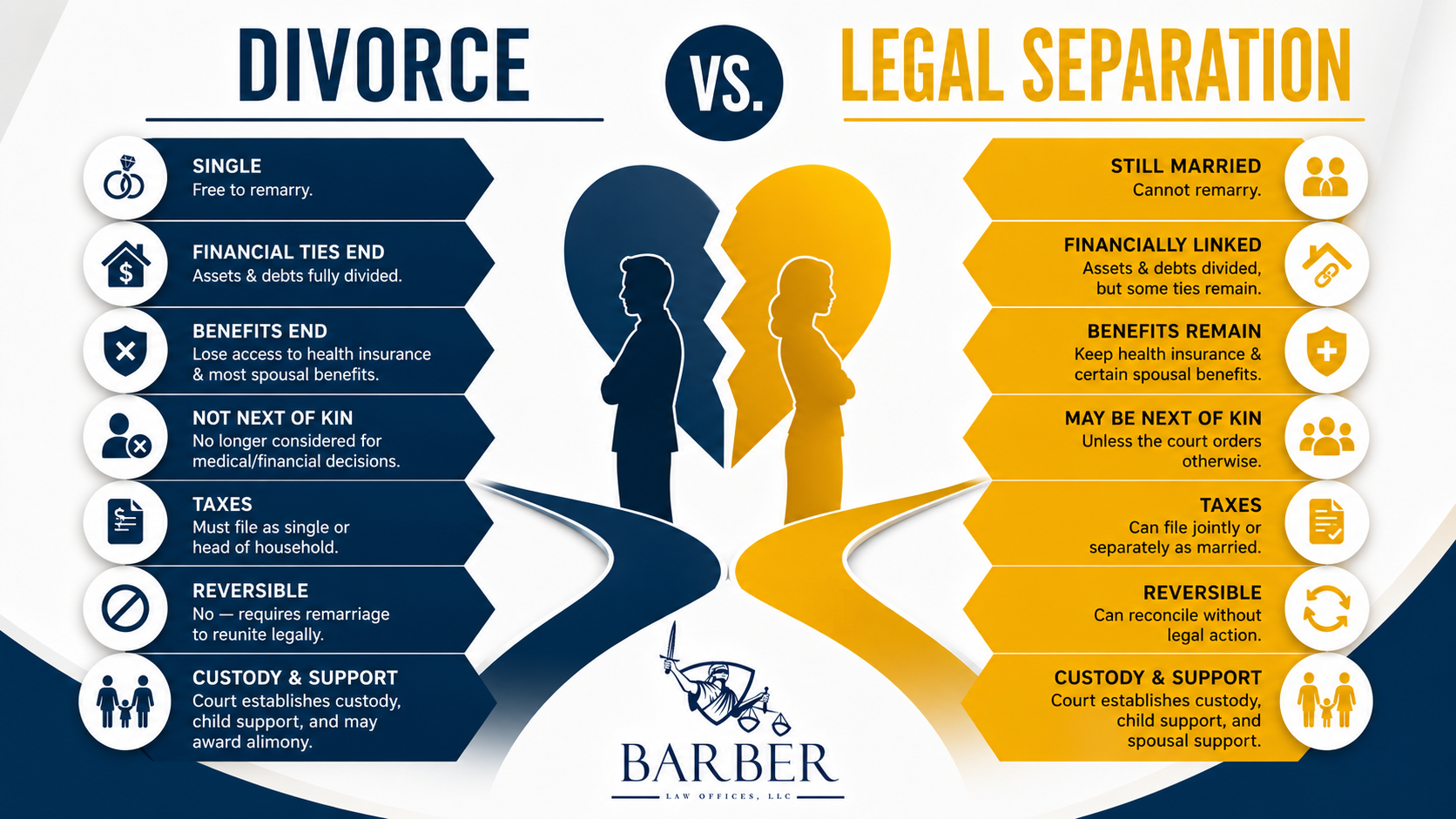
The most significant difference between divorce and legal separation is marital status. With legal separation, spouses remain legally married even while living apart. Divorce permanently ends the marriage and restores both parties to single status.
Property Division
Both processes involve addressing marital property and debts. However, divorce permanently divides marital assets, while legal separation may leave certain financial ties intact. This distinction can significantly impact retirement planning, taxes, estate planning, and future financial decisions.
Child Custody and Child Support
Illinois courts calculate financial support obligations using the state’s child support guidelines, which consider factors such as parental income, parenting time, and the child’s needs. However, divorce creates permanent court orders that fully define each parent’s post-marriage rights and responsibilities.
Health Insurance and Benefits
Health insurance is one of the most common reasons couples choose legal separation instead of divorce. In some cases, a legally separated spouse may remain eligible for coverage under the other spouse’s insurance plan. After a divorce, some individuals may qualify for temporary continuation of health coverage, COBRA continuation coverage, although eligibility and costs can vary depending on the employer’s health plan.
Taxes and Financial Implications
Couples who remain legally married through separation may still qualify for certain tax advantages, depending on their circumstances. Divorce can also affect:
- Retirement accounts
- Social Security benefits
- Estate planning rights
- Inheritance rights
- Filing status
Understanding these financial implications is critical before deciding between divorce and legal separation.
Ability to Remarry
Only divorce allows either spouse to legally remarry. Because legal separation does not dissolve the marriage, remarriage is not permitted unless the couple later divorces.
Religious or Personal Considerations
For some couples, religious beliefs or personal values make legal separation more appealing than divorce. Others prefer the finality and independence that divorce provides.
Read: How to Tell Your Spouse You Want a Divorce or Separation
Is Legal Separation Better Than Divorce?
There is no universal answer. Legal separation may be beneficial for couples who want time apart without permanently ending the marriage. Divorce may be the better option for individuals seeking a complete legal and financial separation.
The right choice often depends on:
- Financial goals
- Parenting concerns
- Religious beliefs
- Insurance considerations
- Emotional readiness
- Long-term plans
Can Legal Separation Turn Into Divorce?
Yes. Many couples initially pursue legal separation before later filing for divorce. In some cases, separation provides time for reflection and reconciliation. In others, it serves as a transitional period before the marriage is permanently ended.
Is Separation Required Before Divorce in Illinois?
Illinois does not require a formal legal separation before filing for divorce. However, if a divorce is contested, the court generally requires spouses to live separately and apart for at least six months before granting the divorce. In some situations, spouses may still live in the same residence while functioning independently.
For uncontested divorces, the process is often more streamlined once both parties agree that irreconcilable differences have caused the breakdown of the marriage.
When Legal Separation May Make More Sense Than Divorce
Legal separation may be the better choice when:
- Couples want time to evaluate reconciliation
- Religious beliefs discourage divorce
- Health insurance coverage must remain intact
- Financial benefits of marriage are still important
- Parents want a structured temporary arrangement
- One or both spouses are uncertain about permanently ending the marriage
When Divorce May Be the Better Long-Term Solution
Divorce is often the better option when:
- The marriage is clearly beyond repair
- One or both spouses want to remarry
- Ongoing conflict makes continued legal ties impractical
- There are concerns involving household safety or domestic violence
- Both spouses want complete financial independence
- A permanent legal resolution is needed
Individuals seeking additional information about Illinois family law rights and procedures may also find helpful guidance through the Illinois Legal Aid Online.

 Speak With a Schaumburg Divorce Attorney About Your Options
Choosing between divorce and legal separation is a major legal and personal decision that can impact your finances, family, and future. Working with an experienced Illinois divorce attorney can help you understand the consequences of each option and determine which path best fits your circumstances.
The experienced attorneys at Barber Law Offices, LLC help clients throughout Schaumburg and surrounding Illinois communities navigate contested and uncontested divorces, legal separations, child custody disputes, and complex property division matters.
Whether you are considering legal separation or are ready to move forward with divorce, our team is committed to protecting your rights and guiding you through every stage of the process. Contact Barber Law Offices, LLC today by calling (847) 303-9780 to schedule a confidential consultation with an experienced Schaumburg divorce lawyer.
Frequently Asked Questions
Why do people get legally separated instead of divorced?
People choose legal separation instead of divorce to live apart while staying legally married. It allows them to set rules for custody, support, and finances without permanently ending the marriage. It is often used when couples are unsure about divorce or want to preserve benefits like health insurance or tax advantages.
Is legal separation legally binding?
Yes. A legal separation is legally binding once approved by the court. Both spouses must follow the terms for custody, support, and financial responsibilities. If one party does not comply, the court can enforce the agreement.
Are spouses still financially responsible for each other during separation?
Yes, spouses may still have financial responsibilities during legal separation. This can include child support, spousal support, shared debts, or other court-ordered expenses. The court defines exactly what each spouse is responsible for.
Can you stay on your spouse’s health insurance after separation?
Sometimes. A legally separated spouse may be able to stay on their partner’s health insurance, depending on the employer or insurance provider’s rules. After a divorce, spousal coverage usually ends, though COBRA coverage may be available temporarily.

Allen Gabe is an experienced Illinois attorney specializing in family law, bankruptcy, and real estate matters. With over 50 years of experience, he has helped countless clients navigate divorce, child custody, debt relief, and complex legal challenges with compassion and expertise. Recognized for his dedication, Allen has received multiple awards for client satisfaction and is an active member of professional and community organizations in the Chicago suburbs.

